

MLM Legal Compliance in India: Complete Guide for Direct Selling Companies
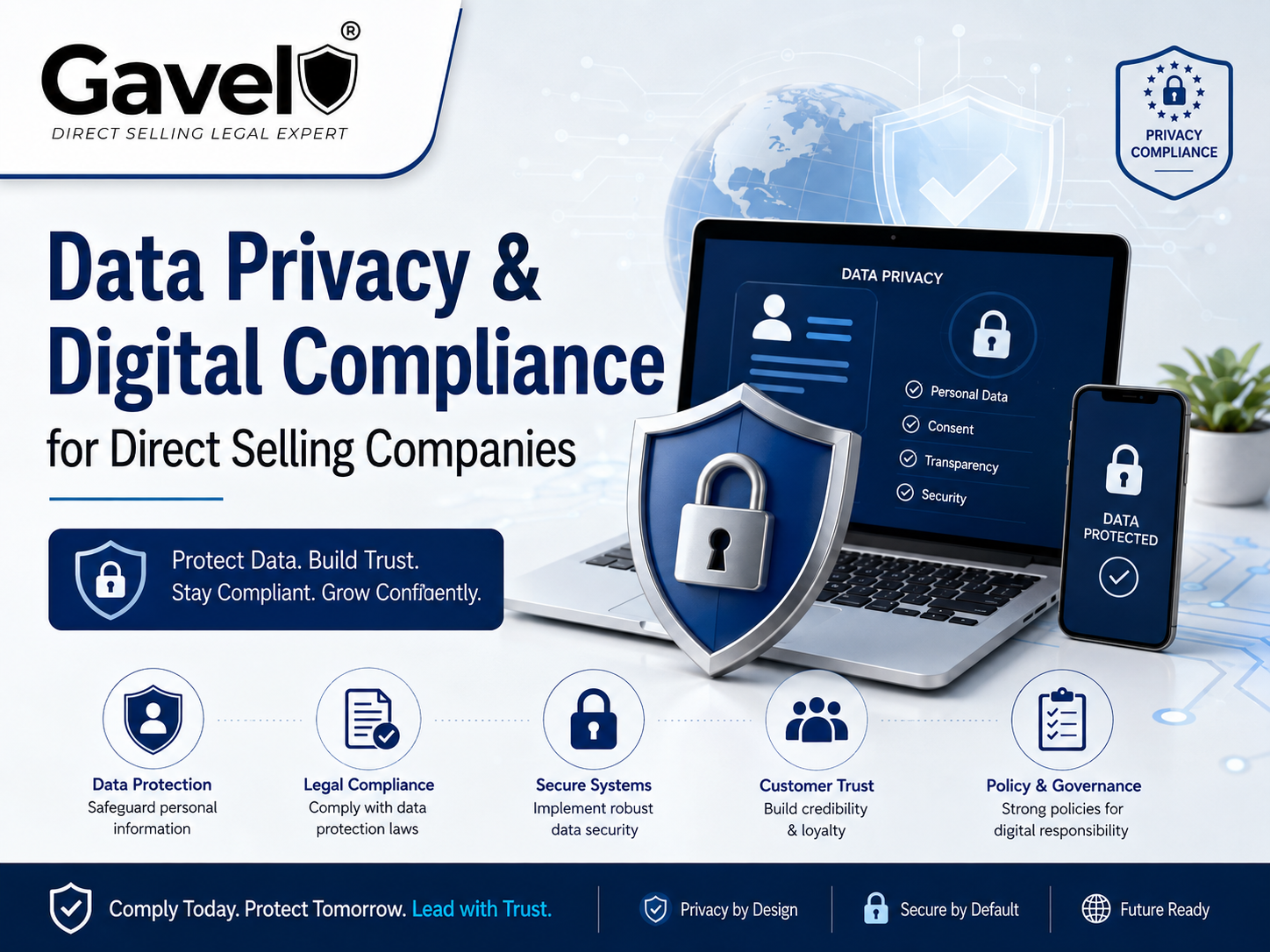
Data Privacy & Digital Compliance for Direct Selling Companies
Digital technology has transformed the direct selling industry. Companies now collect and process significant amounts of information from customers, direct sellers, leads, employees, and business partners through websites, mobile applications, CRM systems, payment platforms, social media, and digital marketing campaigns.
With this increased reliance on digital systems comes an important responsibility: protecting personal data and maintaining digital compliance.
For direct selling companies operating in India, data privacy should be treated as an ongoing compliance function rather than simply an IT issue. Companies should establish appropriate policies, controls, contracts, and processes for collecting, using, storing, sharing, and deleting personal data.
1. Understand What Personal Data You Collect
A direct selling company should identify the categories of personal information it collects, such as:
- Name, address, email address, and telephone number
- Distributor or seller registration information
- Customer purchase and transaction information
- Payment-related information
- Account and login information
- Marketing preferences
- Website and application usage information
- Information collected through customer support
- Information shared through digital forms and campaigns
Creating a data inventory helps the company understand what information it holds, why it is collected, where it is stored, and who can access it.
2. Provide Appropriate Privacy Information
Companies should clearly explain their data practices through an accessible privacy notice.
The privacy notice should address matters such as:
- What personal data is collected
- Why the information is collected
- How it is used
- How it may be shared
- Data retention practices
- Security measures
- Individual rights and available grievance mechanisms
- Contact information for privacy-related queries
The notice should be written in clear and understandable language rather than complicated legal terminology.
3. Follow Lawful Data Collection Practices
Personal data should not be collected indiscriminately.
Before collecting information, companies should identify the applicable legal basis and ensure that the collection and processing are consistent with applicable privacy requirements. Digital forms, registration pages, mobile applications, and websites should be reviewed to ensure that users receive appropriate information and, where required, provide valid consent.
Particular care should be taken with:
- Newsletter subscriptions
- Promotional communications
- Lead-generation forms
- Mobile applications
- Referral programs
- Online distributor registration
- Customer surveys
- Cookies and tracking technologies
4. Protect Customer and Distributor Information
Direct selling businesses should implement reasonable technical and organizational safeguards to protect personal data.
Important controls may include:
- Access controls and role-based permissions
- Strong authentication
- Encryption where appropriate
- Secure payment processing
- Regular security testing
- Backup and recovery procedures
- Device and endpoint security
- Employee awareness and training
- Monitoring of unauthorized access
- Incident-response procedures
Access to sensitive information should be restricted to employees and service providers who genuinely need it.
5. Manage Third-Party Service Providers
Direct selling companies frequently work with external technology and service providers, including:
- CRM providers
- Cloud-storage providers
- Payment gateways
- Marketing platforms
- Logistics providers
- Website developers
- Analytics providers
- Customer-support platforms
Companies should conduct appropriate due diligence and establish suitable contractual safeguards covering data protection, confidentiality, security, access, incident reporting, and data deletion or return.
6. Establish a Data Retention Policy
Keeping personal information indefinitely can increase privacy and security risks.
Companies should determine how long different categories of information need to be retained based on applicable legal, contractual, accounting, tax, operational, and business requirements.
A practical retention framework should identify:
Data category → Purpose → Retention period → Storage location → Deletion procedure
When information is no longer required and there is no applicable reason to retain it, the company should have a secure deletion or anonymization process.
7. Prepare for Data Breaches and Security Incidents
A privacy compliance program should include a documented incident-response process.
The company should be able to:
- Detect a potential incident.
- Contain the incident.
- Assess the affected systems and information.
- Document the incident.
- Determine applicable notification obligations.
- Take corrective action.
- Review controls to prevent recurrence.
Employees and direct sellers should also know how to report suspected phishing, unauthorized access, lost devices, or accidental disclosure of customer information.
8. Ensure Digital Marketing Compliance
Digital marketing is particularly important for direct selling companies.
Marketing teams and distributors should follow applicable requirements when using:
- Email marketing
- SMS
- WhatsApp or other messaging platforms
- Social media
- Digital advertisements
- Customer databases
- Referral campaigns
- Influencer marketing
Companies should establish clear rules for promotional communications and monitor whether independent sellers are making unauthorized claims or using customer information improperly.
9. Train Employees and Direct Sellers
Even strong technical systems can fail because of human error.
Regular training should cover:
- Privacy principles
- Secure password practices
- Phishing awareness
- Handling customer information
- Sharing information with third parties
- Social-media conduct
- Marketing communications
- Data breach reporting
- Use of company devices and systems
Direct sellers should receive practical guidance because they may interact directly with customers and handle customer information outside the company's central systems.
10. Conduct Regular Compliance Reviews
Data privacy compliance should be reviewed periodically.
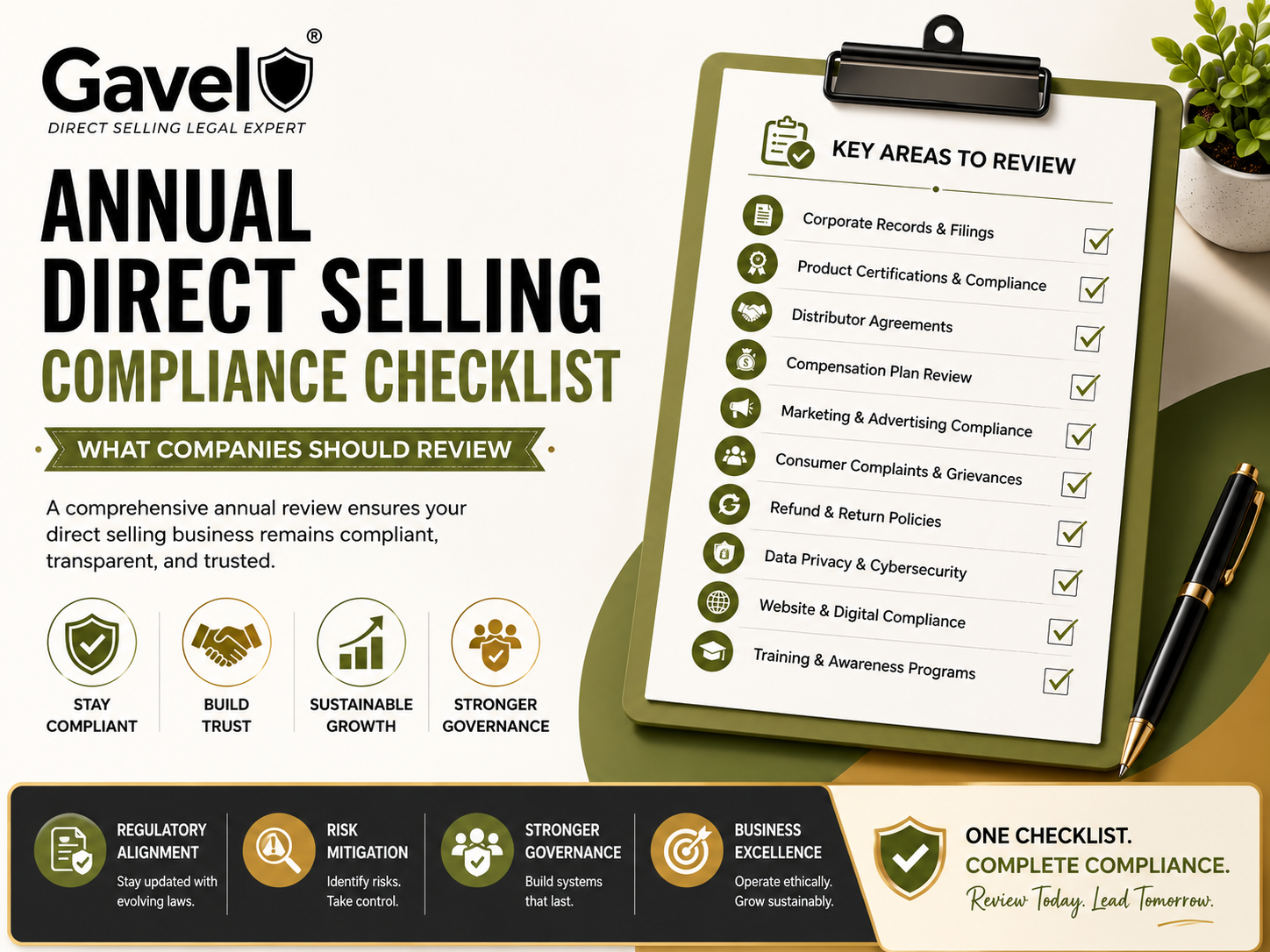
A direct selling company can maintain a digital compliance checklist covering:
- Privacy policy
- Data inventory
- Consent and notices
- Distributor agreements
- Vendor contracts
- Security controls
- Data retention
- Marketing communications
- Complaint and grievance handling
- Incident-response procedures
- Employee and seller training
- Periodic audits
Conclusion
Data privacy and digital compliance are becoming increasingly important for direct selling companies. Protecting personal information is not only about regulatory compliance; it also helps build customer confidence and protect the company's reputation.
A strong compliance framework should combine privacy policies, secure technology, responsible data handling, third-party controls, employee training, distributor awareness, and regular audits.
Note: Privacy obligations can vary depending on the company's activities, the type of data processed, and applicable laws and regulations. Companies should obtain appropriate legal advice for their specific operations.

.png)