

MLM Legal Compliance in India: Complete Guide for Direct Selling Companies
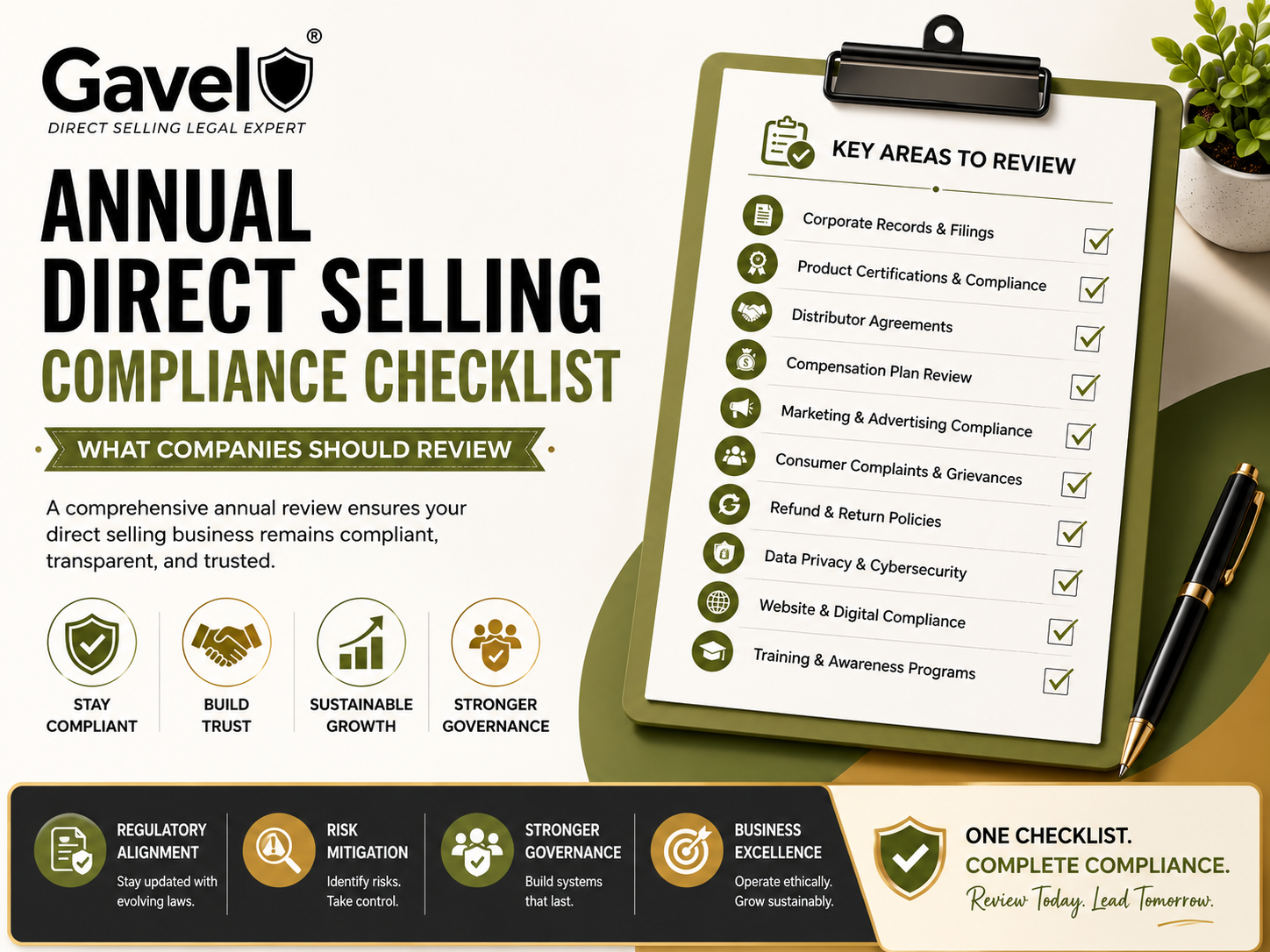
Annual Direct Selling Compliance Checklist: What Companies Should Review
Direct selling companies should conduct a comprehensive compliance review at least once every year to ensure that their business practices, distributor relationships, products, marketing activities, and customer processes remain aligned with applicable laws and regulations.
An annual compliance review is not simply a documentation exercise. It helps identify regulatory gaps, reduce legal and financial risks, improve transparency, and strengthen consumer and distributor trust.
1. Review Company Registration and Business Documents
Companies should verify that their corporate registrations, licenses, statutory records, agreements, and other required business documents are current and properly maintained.
The review should cover:
- Company registration and statutory documents
- Applicable business licenses and registrations
- Registered office and contact information
- Distributor and supplier agreements
- Internal compliance policies
- Board and management records
2. Review Direct Seller Agreements
Distributor or direct seller agreements should clearly explain the rights and responsibilities of both the company and its sellers.
Check whether agreements properly address:
- Appointment and eligibility requirements
- Code of conduct
- Product-selling responsibilities
- Commission and incentive terms
- Prohibited activities
- Refund and return procedures
- Termination and suspension provisions
- Grievance mechanisms
Any changes in compensation structures or business policies should be reflected in updated documentation where required.
3. Verify Product Compliance and Certifications
Products sold through the direct selling network should be reviewed for applicable regulatory requirements.
Companies should verify:
- Product licenses and registrations, where applicable
- Required certifications and approvals
- Product labeling and packaging
- Ingredient or material disclosures
- Expiry and batch information
- Advertising and product claims
- Applicable quality and safety requirements
Special attention should be given to products such as food, cosmetics, health-related products, and other regulated categories because additional requirements may apply.
4. Review Compensation and Incentive Plans
The compensation plan should be reviewed annually to determine whether commissions, bonuses, incentives, and rewards remain compliant.
Companies should examine whether compensation is appropriately connected to genuine product or service sales and whether the plan creates risks associated with recruitment-focused or pyramid-type structures.
The review should include:
- Commission calculations
- Bonuses and incentives
- Qualification requirements
- Sales targets
- Recruitment-related payments
- Retail sales requirements
- Income representations
- Disclosure of earning expectations
5. Audit Marketing and Advertising Practices
Marketing materials should be reviewed regularly because misleading claims can create significant compliance risks.
Review:
- Website content
- Social media posts
- Distributor-created content
- Product claims
- Income and earnings claims
- Testimonials and endorsements
- Promotional campaigns
- Influencer and affiliate marketing
- Before-and-after claims, where applicable
Direct sellers should receive clear guidance on what they can and cannot claim when promoting products or business opportunities.
6. Review Consumer Protection Practices
Companies should ensure that customers receive clear information about products, prices, terms, returns, refunds, cancellations, and complaint procedures.
An annual review should cover:
- Customer terms and conditions
- Return and refund policies
- Cancellation procedures
- Order and payment records
- Complaint handling
- Customer support
- Product disclosures
- Fair and transparent pricing
7. Check Data Privacy and Digital Compliance
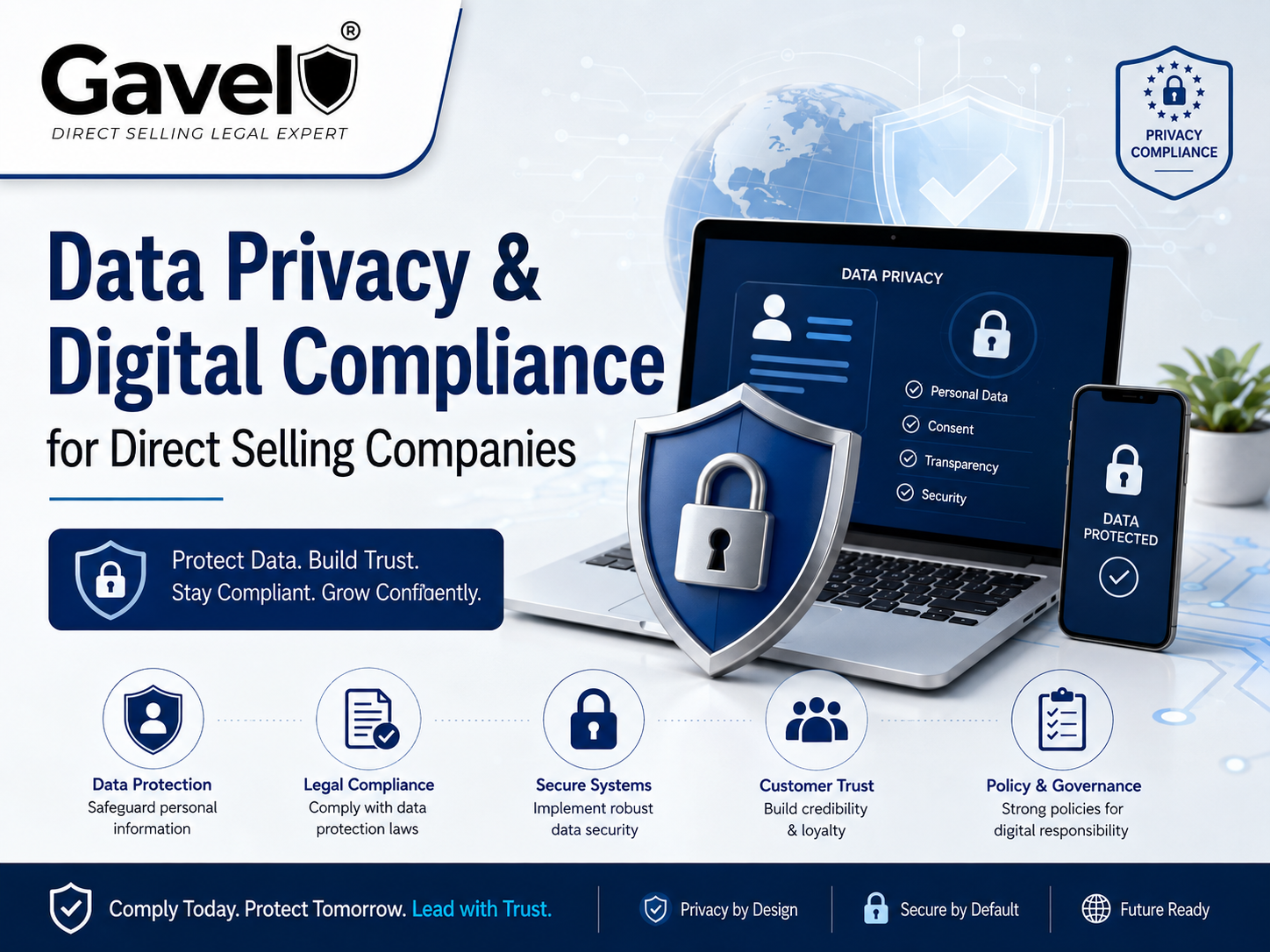
Direct selling companies often collect personal information from customers and distributors. Companies should review how personal data is collected, stored, used, shared, and protected.
The annual review should consider:
- Privacy notices
- Consent mechanisms
- Data collection practices
- Access controls
- Data retention
- Third-party data processors
- Marketing communications
- Data security measures
- Data breach response procedures
8. Review Records and Financial Documentation
Accurate records are important for both operational management and regulatory compliance.
Companies should maintain and periodically audit:
- Sales records
- Distributor records
- Commission statements
- Customer transactions
- Refunds and returns
- Tax records
- Compliance training records
- Complaints and resolutions
- Marketing approvals
- Product documentation
Records should be retained according to applicable legal and internal retention requirements.
9. Conduct Distributor Compliance Training
Annual training can help distributors understand current policies and regulatory expectations.
Training should cover:
- Code of conduct
- Product claims
- Advertising rules
- Income claims
- Customer rights
- Refund procedures
- Data privacy
- Prohibited business practices
- Ethical selling practices
Training completion should be documented for compliance monitoring.
10. Review Complaints, Violations and Corrective Actions
Companies should analyze complaints and compliance incidents from the previous year to identify recurring problems.
Management should review:
- Customer complaints
- Distributor complaints
- Policy violations
- Misleading advertisements
- Unauthorized product claims
- Refund disputes
- Data-related incidents
- Disciplinary actions
- Corrective and preventive measures
The goal should be to identify the root cause and prevent similar issues from recurring.
Annual Compliance Review: A Practical Approach
A useful annual process can be divided into four stages:
Stage 1 – Collect: Gather agreements, policies, product documents, marketing materials, records, complaints, and training reports.
Stage 2 – Review: Compare current practices against applicable laws, regulations, internal policies, and contractual requirements.
Stage 3 – Correct: Address identified gaps, update documents, provide additional training, and implement corrective measures.
Stage 4 – Document: Maintain an annual compliance report showing what was reviewed, what issues were identified, and what actions were taken.
Conclusion
An annual compliance review helps direct selling companies remain prepared for regulatory changes while protecting customers, distributors, and the company itself. A strong compliance program should be treated as an ongoing business process rather than a once-a-year formality.
Companies should also obtain professional legal or regulatory advice where requirements are complex or vary by product, jurisdiction, or business model.


.png)