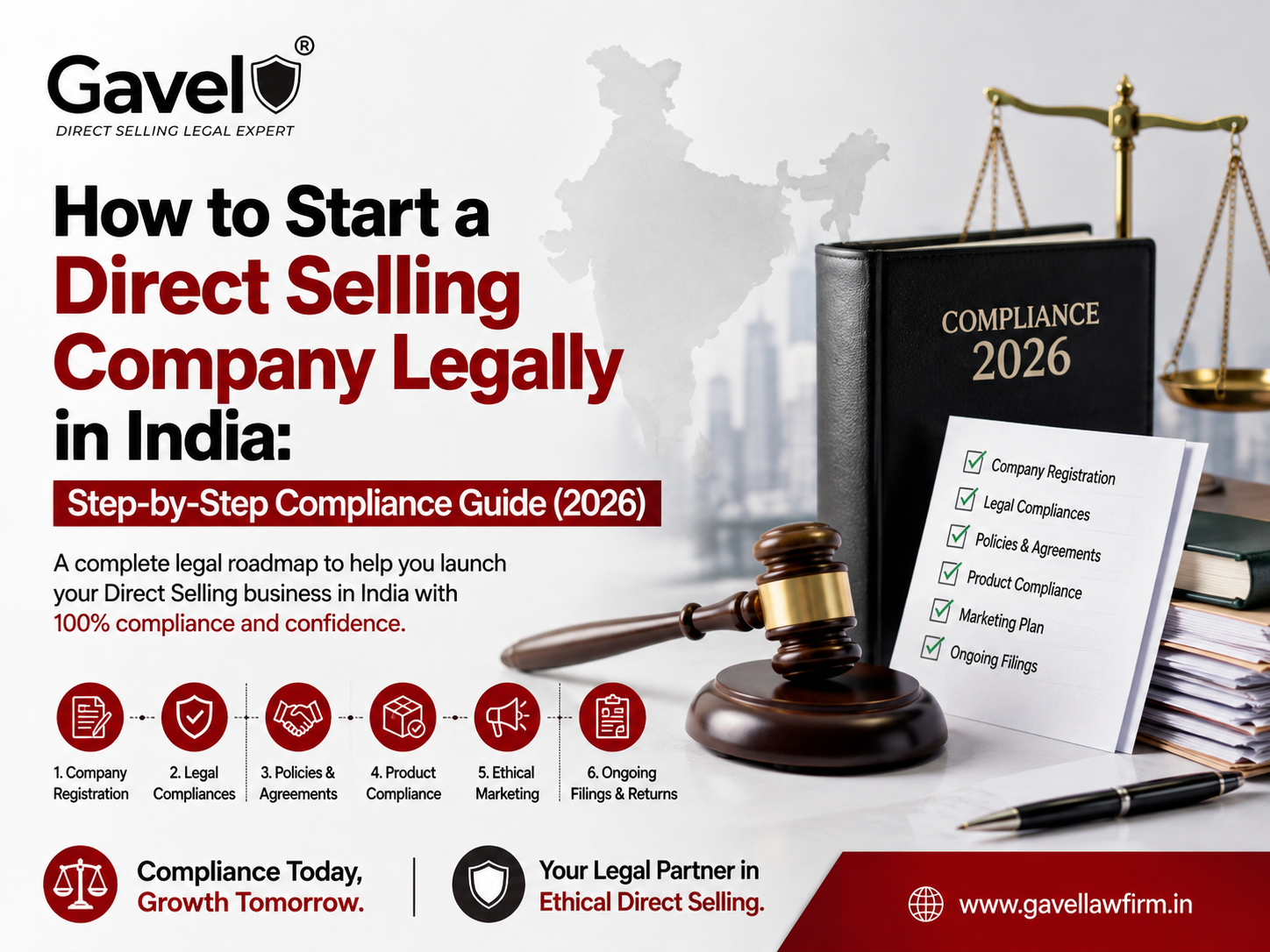

Direct Selling Company Registration in India Complete Legal & Compliance Guide
Starting a Direct Selling company in India is no longer just about launching products and creating a compensation plan. Today's regulatory environment demands transparency, legal compliance, consumer protection, and ethical business practices.
Many entrepreneurs believe that incorporating a company and creating an MLM software is enough to start operations. Unfortunately, this misconception has resulted in several businesses receiving consumer complaints, legal notices, and regulatory scrutiny.
If you're planning to launch a Direct Selling company in 2026, this guide will help you understand the legal requirements, compliance checklist, and practical steps required to build a sustainable and legally compliant business.
What is a Direct Selling Company?
A Direct Selling company markets and sells products or services directly to consumers without relying on traditional retail stores. Independent Direct Sellers promote products through personal recommendations, demonstrations, digital platforms, and customer referrals.
However, under Indian law, a Direct Selling business cannot operate as a money circulation or pyramid scheme. The primary focus must always remain on the genuine sale of products or services.
Why Legal Compliance Matters
Many businesses focus heavily on recruitment and ignore regulatory requirements.
Legal compliance helps your company:
- Build customer trust
- Reduce legal risks
- Avoid consumer complaints
- Protect promoters and directors
- Improve investor confidence
- Create long-term business sustainability
Compliance is not an expense—it's an investment in your company's future.
Step 1: Register Your Business Entity
Before launching operations, choose an appropriate legal structure.
Most Direct Selling companies are incorporated as:
- Private Limited Company
- Limited Liability Partnership (LLP)
- One Person Company (OPC)
A Private Limited Company is generally preferred because it provides greater credibility, easier investment opportunities, and better scalability.
After incorporation, obtain:
- PAN
- TAN
- GST Registration (where applicable)
- Bank Account
- Digital Signature Certificate (DSC)
READ MORE - MLM Compensation Plan India: Legal Compliance Guide 2026 | Gavel Law Firm
Step 2: Develop Genuine Products
A Direct Selling company should always be product-driven.
Avoid launching a business that primarily rewards recruitment.
Instead, ensure:
- Genuine market demand
- Competitive pricing
- Product quality
- Consumer satisfaction
- Proper invoices
If products require regulatory approval, obtain the necessary certifications before sale.
Examples include:
- FSSAI
- AYUSH License
- Cosmetic Registration
- BIS Certification
- Legal Metrology Compliance
The certification depends on the product category.
Step 3: Prepare a Legally Compliant Compensation Plan
One of the biggest mistakes new companies make is copying compensation plans from existing businesses without legal review.
Your compensation plan should:
- Reward product sales
- Avoid recruitment-based income
- Clearly define incentives
- Explain bonuses transparently
- Prevent unfair trade practices
An improperly designed compensation plan can expose the company to significant legal risks.
Step 4: Draft Essential Legal Documents
Every Direct Selling company should have professionally drafted legal documents.
These generally include:
- Direct Seller Agreement
- Policies & Procedures
- Code of Ethics
- Privacy Policy
- Refund & Return Policy
- Website Terms & Conditions
- Shipping Policy
- Grievance Redressal Policy
- Distributor Cancellation Policy
These documents establish clear rights and responsibilities for both the company and its Direct Sellers.
Step 5: Comply with Consumer Protection (Direct Selling) Rules, 2021
Every Direct Selling company operating in India should align its business practices with the Consumer Protection (Direct Selling) Rules, 2021.
Some important compliance areas include:
- Transparent business practices
- Proper consumer grievance mechanism
- Accurate product information
- Identity verification of Direct Sellers
- No misleading income claims
- No unfair recruitment practices
- Clear cancellation and refund procedures
Following these rules demonstrates your commitment to ethical business practices.
Step 6: Build a Legally Compliant Website
Your company website should do more than showcase products.
It should also include:
- Company information
- Contact details
- GST details (where applicable)
- Policies
- Complaint mechanism
- Refund information
- Product disclosures
- Privacy notice
- Terms of use
A professionally structured website enhances transparency and customer confidence.
Step 7: Choose the Right MLM Software
Your software should support legal compliance—not create compliance risks.
Look for features such as:
- KYC integration
- Invoice generation
- Tax calculation
- Wallet transparency
- Commission tracking
- Order management
- Consumer records
- Refund management
- Audit logs
Selecting software based only on price can create operational challenges later.
Step 8: Protect Your Brand
Brand protection is often overlooked during the initial stages.
Consider registering:
- Trademark
- Logo
- Brand Name
- Domain Name
Protecting intellectual property helps prevent unauthorized use and strengthens your market presence.
Step 9: Create an Effective Grievance Redressal System
Consumers should have a simple process for resolving complaints.
A good grievance system should include:
- Email support
- Customer helpline
- Complaint tracking
- Defined response timelines
- Escalation process
Efficient complaint handling builds long-term credibility.
Step 10: Maintain Ongoing Compliance
Compliance is an ongoing process, not a one-time task.
Regularly review:
- Legal documents
- Product labels
- Website content
- Compensation plan
- Advertising claims
- Tax filings
- Annual ROC filings
- State-specific compliance requirements
Regular legal audits can help identify issues before they become major problems.
Common Mistakes New Direct Selling Companies Make
Many startups unintentionally create legal risks by:
- Prioritizing recruitment over product sales
- Using copied compensation plans
- Ignoring legal documentation
- Making unrealistic income claims
- Selling uncertified products
- Operating without proper grievance mechanisms
- Launching without legal review
Avoiding these mistakes can save significant time, money, and reputational damage.
Final Thoughts
Launching a Direct Selling company in India is an exciting business opportunity, but success depends on building a legally compliant and consumer-focused organization.
A well-structured business backed by proper documentation, ethical marketing, compliant compensation plans, and robust governance is far more likely to achieve sustainable growth than one focused solely on rapid expansion.
Before launching your business, invest time in understanding the legal framework and implementing the right compliance measures. Doing so not only minimizes legal risks but also strengthens your brand's credibility in an increasingly regulated marketplace.
At Gavel Direct Selling Legal Expert, we help entrepreneurs, startups, and established Direct Selling companies navigate every stage of their legal journey—from company incorporation and product compliance to compensation plan review, legal documentation, website compliance, and regulatory advisory.
Building your business the right way from day one is always easier than fixing legal issues later.


.png)