


MLM Legal Compliance in India: Complete Guide for Direct Selling Companies
Multi-Level Marketing (MLM) is a business model where companies sell products through a network of independent distributors instead of traditional retail stores. In this system, individuals earn money not only by selling products but also by building a team of distributors. Many businesses in India are now exploring MLM because it allows companies to grow quickly through personal networks. However, it is also important to follow proper legal guidelines while operating an MLM business. Professional legal guidance from firms like Gavel Law Firm can help companies structure their direct selling models in compliance with Indian laws and regulations.
Basics of Multi-Level Marketing
MLM Business Model Explained
The MLM business model works through a network-based structure. Instead of relying on physical stores or large advertising campaigns, companies depend on distributors to promote and sell their products. These distributors purchase products from the company and then sell them to customers directly.
In addition to selling products, distributors can recruit other individuals into the network. The recruited members become part of the distributor’s team or “downline.” When the downline members sell products, a portion of their earnings may go to the person who recruited them, depending on the compensation plan.
This structure creates multiple levels of distributors, which is why it is called multi-level marketing. The main idea behind the model is to reward both product sales and network growth. However, companies must ensure that income is mainly based on product sales rather than recruitment.
Role of Distributors and Networks
Distributors play a central role in MLM companies. They act as sellers, promoters, and network builders. Their responsibilities usually include:
- Selling products to customers
- Promoting the company through personal networks
- Recruiting new distributors
- Training their downline team members
As the distributor network grows, the company can reach more customers without spending large amounts on traditional marketing. Distributors also benefit because they can build a business with flexible working hours.
However, MLM companies must maintain transparency and proper documentation to avoid legal complications. Consulting experts such as Gavel Law Firm can help businesses design compliant distributor agreements, compensation plans, and operational policies.
Income and Compensation in MLM
How Earnings Are Structured
Income in MLM generally comes from two main sources: product sales and team performance. Distributors earn commissions when they sell products directly to customers. They may also receive bonuses based on the sales made by their team members.
For example, if a distributor recruits several people who actively sell products, the distributor may receive a percentage of their sales volume. This encourages distributors to build and support their teams.
Different companies use different compensation plans, such as:
- Binary plans
- Matrix plans
- Unilevel plans
- Hybrid plans
Each plan determines how commissions and bonuses are calculated. A well-designed compensation structure is important for long-term sustainability.
Understanding Commissions and Incentives
Commissions and incentives are designed to motivate distributors. Some common incentives in MLM businesses include:
- Direct sales commissions
- Team performance bonuses
- Leadership rewards
- Rank advancement bonuses
- Travel or lifestyle incentives
However, companies must ensure that commissions are linked primarily to product sales. If income is based mostly on recruitment fees rather than actual sales, the business may be considered illegal.
This is why legal structuring and compliance are essential. Professional advisors like Gavel Law Firm assist companies in creating legally compliant compensation plans that follow Indian direct selling regulations.
Legal Perspective of MLM
Multi-level marketing is legal in many countries, including India, as long as the business follows proper guidelines. The Government of India has introduced Direct Selling Rules to regulate MLM and direct selling companies.
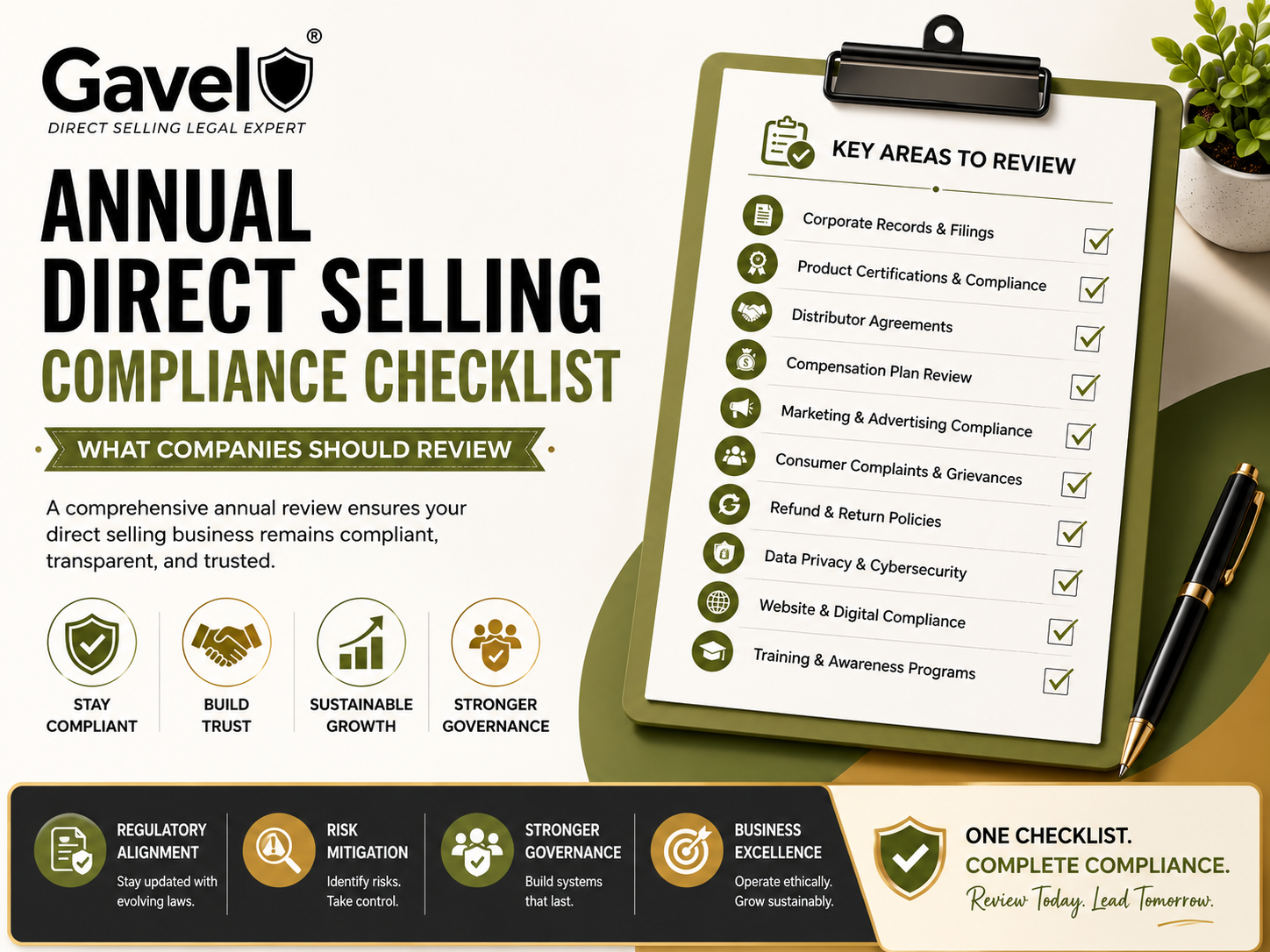
Some important legal requirements include:
- Transparent compensation plans
- No income promises without product sales
- Proper distributor agreements
- Clear refund and return policies
- Ethical marketing practices
Companies that fail to follow these rules may face legal action or penalties.
Legal experts such as Gavel Law Firm specialize in providing legal consulting for direct selling and MLM businesses. Their services include MLM legal structuring, direct selling compliance, compensation plan review, legal documentation, and regulatory guidance. With professional support, companies can operate their MLM model safely and legally.
Difference Between MLM and Pyramid Schemes
MLM and pyramid schemes may appear similar, but they are very different in terms of legality and structure.
A legitimate MLM business focuses on selling real products or services. Distributors earn commissions mainly from product sales and team sales performance.
A pyramid scheme, on the other hand, focuses mainly on recruiting new members and collecting joining fees. There is little or no emphasis on product sales. Because of this, pyramid schemes are illegal in many countries, including India.
To avoid legal risks, businesses must ensure that their model follows legal MLM principles. Firms like Gavel Law Firm help companies review their business model and ensure that it does not fall under illegal pyramid scheme structures.
Conclusion
Multi-Level Marketing can be a powerful business model when it is structured properly and operated ethically. It allows companies to expand through personal networks while giving individuals an opportunity to earn income through sales and team building. However, legal compliance is extremely important for MLM businesses to operate successfully in India.
This is where professional legal assistance becomes valuable. Gavel Law Firm provides specialized legal services for MLM and direct selling companies, including company registration, compliance advisory, compensation plan review, legal documentation, and regulatory guidance. With the right legal structure and professional support, businesses can build a sustainable and legally compliant MLM model.


.png)